Nerve Surgery in Ganganagar Jaipur
During Surgery
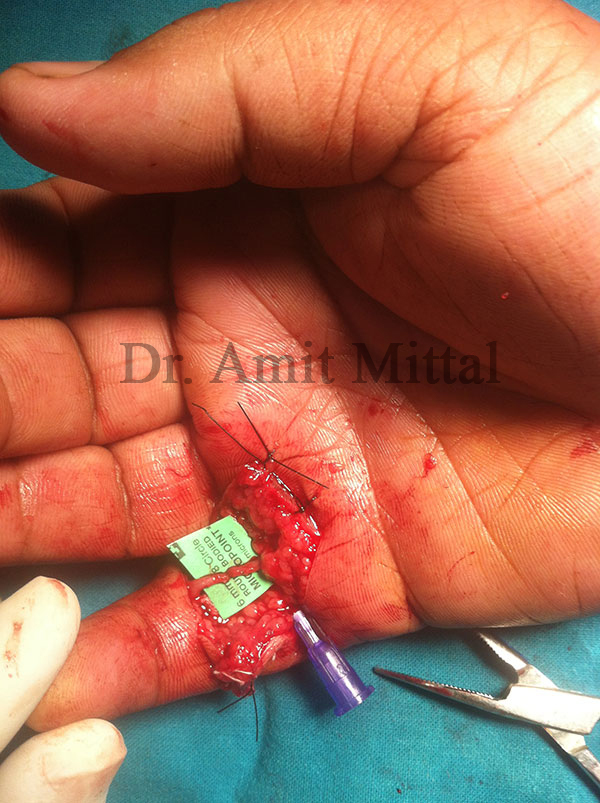
After Operation
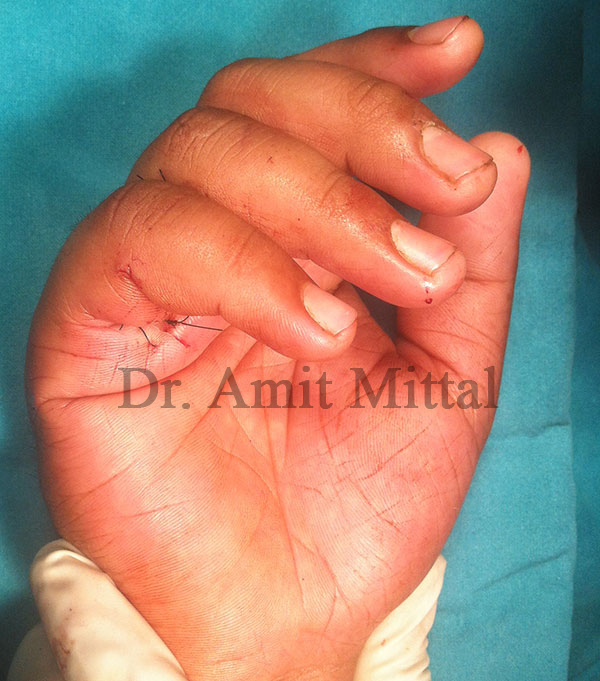
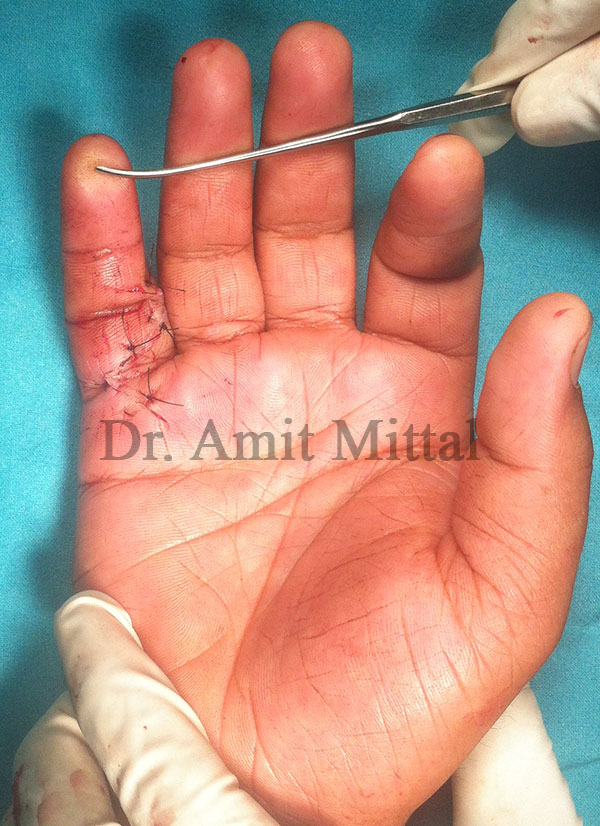
Nerve Surgery
Nerve injuries and disorders range widely in their complexity, as do the treatments available to lessen pain and restore mobility. Injuries to the peripheral nerve system—nerves in the shoulders, arms and legs, for example—are common and can be caused by a variety of factors. Some nerve disorders can affect muscles and result in loss of sensation, paralysis and pain.
Overview
Many people who seek relief from a nerve disorder are in pain that can be debilitating, affecting every aspect of life. We work with these kinds of injuries with our pain management colleagues who are specifically trained to treat nerve injuries and disorders. We offer treatment that is tailored to each patient’s specific condition and performed by specialists who excel in technical expertise and compassionate care. Your surgeon will work to gain a thorough understanding of your condition and offer treatment options that can help alleviate pain and restore mobility.
Nerve Regeneration
After injury, a nerve will try to repair itself by sprouting in regenerating nerve units. These regenerating units will then try to restore function to any affected muscle or skin, a process called reinnervation. When these nerves make a correct connection, the body is able to recover muscle function and skin sensation, if lost, is likely to return. But if the regenerating nerve fibers do not make a correct connection, the injury does not heal.
Nerves regenerate at a rate of about one inch per month. Although it is possible to regain sensation after nerve supply depletion (called denervation), muscle reinnervation will not occur after long periods of time without nerve innervation (nerve supply). In other words, the more quickly an injured nerve is reconnected to muscle, the more likely it is that recovery will take place. Our specialists may use tests called electrodiagnostics (EDX) or electromyography (EMG) to test muscle recovery over a period of time. If the nerve-muscle connection doesn’t occur in three to six months following an injury, your specialist may discuss surgical treatment with you.
Nerve Surgery
If surgery is the best treatment option for you, you will likely have one of the following types of surgery: nerve repair, nerve graft, nerve transfer, neurolysis or tendon transfer. Again, your specialist will talk with you about the treatment best suited to your condition.
To foster nerve regeneration, nerve fibers need to be guided to the appropriate muscle or sensory unit. If the nerve has been cut, a nerve repair procedure is used to reattach the two ends of the nerve. This works best when the nerve has been cut sharply and cleanly. When there is more extensive injury and the nerve ends can’t be reconnected, a surgery called nerve graft may be a more suitable option.
In a nerve graft, a small piece of donor nerve is used to bridge the gap between the two nerve ends; the damaged nerve will then regenerate across the graft to provide recovery. The nerve graft, using small, non-critical sensor nerves, is taken from another part of the body. If the nerve injury gap is small, then a cadaver nerve may be used.
Nerve transfers are slightly different than nerve grafts. In severe injuries, recovery may not be anticipated for a very long period of time. Rather than grafting a nerve from another place on the body, nerve transfers make use of a nerve closer to the point of injury, allowing for more efficient recovery.
Sometimes scar tissue will form around the injured nerve and prevent it from regenerating. A procedure called neurolysis can remove scarring and thus encourage the nerve to heal properly.
What to Expect
Once you request an appointment, our scheduling team will call you to schedule your initial consultation with a nerve specialist.
Because our surgeons are trained and experienced in all aspects of nerve surgery, we can offer comprehensive treatments tailored to children and adults. If your condition requires surgical reconstruction, we will discuss with you the various options available, including their benefits and risks. And we will work with you to determine the treatment plan for your specific needs, ensuring that you understand the plan and can feel confident about the decisions you make.
Are you suffering from chronic pain caused due to nerve injuries? The nerve surgery in Ganganagar Jaipur can help you get rid of the pain so you can step ahead for a painless life. The key objective of undertaking peripheral nerve surgery is to achieve a better diagnosis of the variety of peripheral nerve disorders such as nerve injuries caused due to accidents, entrapments and different types of nerve tumors like the neurofibroma. Thus, accurate treatment can be provided through surgery options.
The peripheral nerves can be referred to as the group of nerves that are situated outside the spinal cord and the brain. More commonly, these include the nerves that belong to the arms, legs chest, face and stomach. Furthermore, these nerves can chronic pain due to factors like nerve injury, diabetic neuropathy or any other kind of surgery. The nerve injury or compression of nerves can be treated with specialized surgical treatment options that emphasize healing chronic nerve pain.
Know all about nerve surgery in Ganganagar Jaipur to heal nerve pain
The surgery can be viewed as a treatment option for chronic pain that occurs after some sort of sports injury, accidents or trauma and further, the pain cannot be relieved by using commonly adopted methods. Such kind of pain might have been caused due to injury to the peripheral nerves. Although patients resort to a variety of therapies such as focussed medication, physical therapy, and orthopedic treatment, it can be observed that the patients suffering from peripheral nerve injuries do not find long term benefits from such methods.
The nerve surgery in Ganganagar Jaipur will be recommended to patients will depend on typical cases that will focus on the type of nerve injury, the duration, the damaged caused due to such injury and the area which will be effected through the surgery. The nerve surgery that primarily focuses on the hand, elbow or wrist is undertaken to improve the functioning of the palm and the upper area of the hand. Depending on the condition, if the nerve can be repaired, diverse surgical methods can be adopted that will include nerve grafting, nerve decompression and the repairment of the nerve. Moreover, in the case where nerves cannot be repaired, the patient can be suggested to undergo tendon transfer treatment in which the surgeons can borrow additional tendons from the other part of the hand so that functions can be restored in the area which has been damaged due to nerve injury.
Small Cut in Little Finger got unnoticed at the time of injury for few weeks. After some time she realized that she is not able to move her little finger and unable to feel the touch. Dr Amit Mittal repaired the nerve and tendon to bring near normal movement and sensation. Now she is comfortable doing her work